“Don’t tell me it can’t be done. Tell me how we can make it work.”
I think in systems, not isolated tasks
When I see a task, I almost automatically see the wider system around it.
What information is needed beforehand? Who will rely on it next? Where could errors occur? What happens when the standard case does not apply? And how should a process be designed so that it works not only on paper, but in day-to-day operations?
This way of thinking has shaped my entire working life.
I have worked in passenger operations at Deutsche Bahn, international order processing, the skilled trades, a law firm, technical customer support and hotel operations. The sectors and formal job titles varied, but my actual role was remarkably consistent:
I brought information together, coordinated workflows, acted as a bridge between stakeholders, stepped in when problems arose and made sure workable outcomes were achieved even when the surrounding structures were incomplete.
I am not only interested in whether an individual task has been completed.
I want to know whether the end-to-end process works.
Staying calm when others lose sight of the bigger picture
I have often worked in situations where there was no complete playbook and no manager immediately available.
As a train manager during a serious incident on the line. As the sole person responsible during a hotel night shift. In technical support, handling issues for which no documented solution yet existed. Or face to face with people who were angry, uncertain or in need of help.
In those situations, my first step is to separate what is critical from what is secondary:
What must be secured immediately? What information is missing? Who needs to be involved? What can I resolve myself? And what must not be overlooked under any circumstances?
I do not need a ready-made instruction for every situation. I can make decisions, take ownership and recognise when specialist or external support is required.
One quality has been reflected back to me repeatedly over the years: even under pressure, I communicate calmly, clearly and in a way people can understand.
That does not mean difficult situations leave me unaffected.
It means I remain able to act.
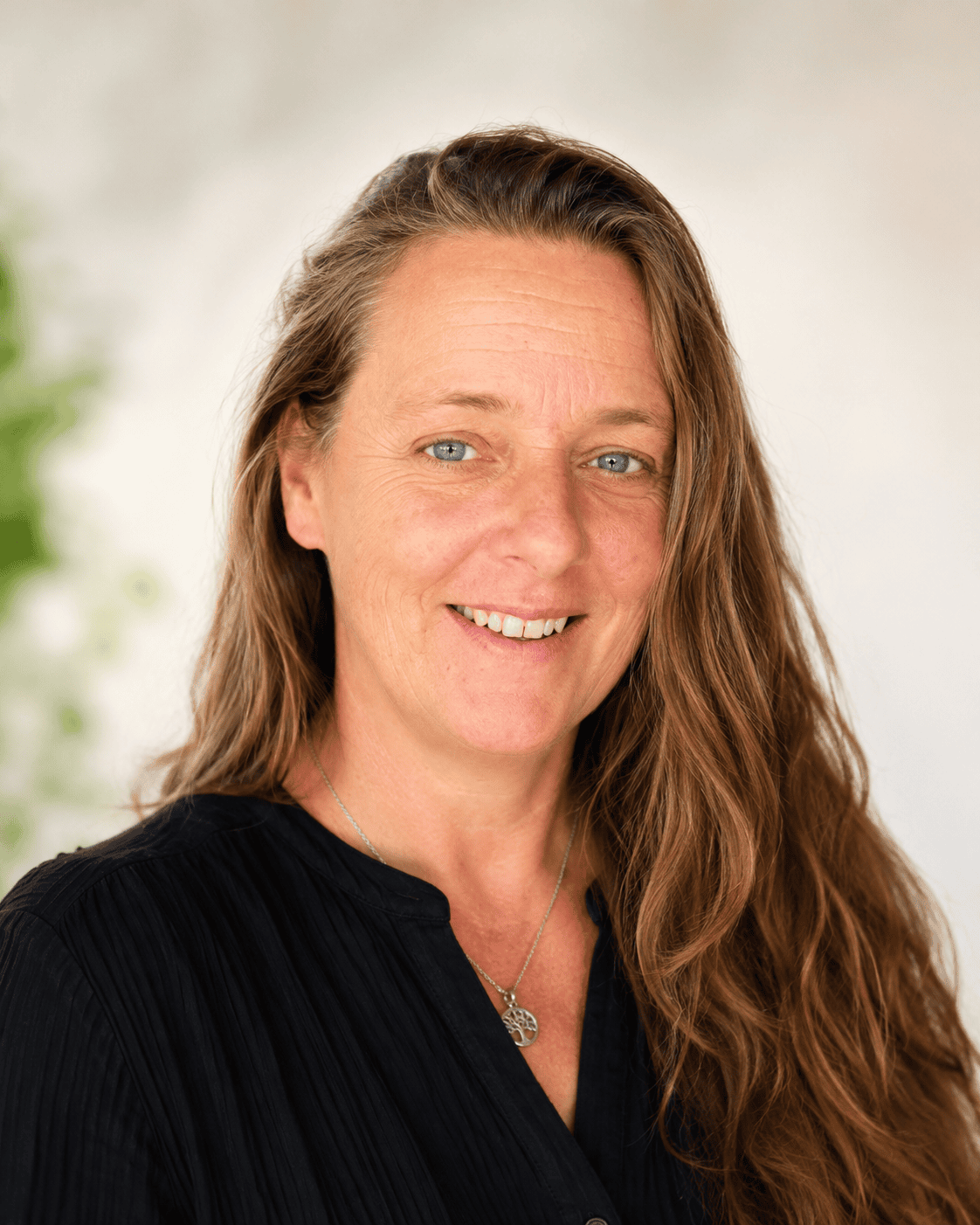
Chaos becomes process. Process becomes solution.
At a Glance
Location
Mallorca, Spain · fully available for remote work
Professional Focus
Project and process coordination · Business operations · Process improvement
Experience
More than 30 years of experience in operational coordination, customer communication, problem-solving and the organisation of complex workflows.
Professional Background
Deutsche Bahn · international order processing · commercial coordination in the skilled trades · legal administration · technical customer support · hotel operations · independent digital and practical projects
Currently
Google Project Management Professional Certificate – in progress, expected completion September 2026
Developing a project management portfolio with four case studies covering process improvement, risk and escalation management, product development and launch, and technical support and knowledge management
Key Areas
Process analysis · Process improvement · Project coordination · Knowledge management · Stakeholder communication · Incident and escalation management
Languages
Native German · Professional working proficiency in Spanish and English · Good understanding of Mallorcan Catalan
Working Model
EU citizen resident and tax resident in Spain · Experienced in remote work · Available for occasional travel within Europe
Working Style
Structured · Analytical · Pragmatic · Persistent · Self-directed · Solution-oriented
The best systems often start with real problems
One good example began with a very personal problem.
When my son was young, I felt that household work took over every morning. I did not simply want to work faster. I wanted to understand why the same tasks kept feeling chaotic.
So I developed my own organisation system built around short daily routines and clearly distributed weekly tasks.
During the same period, I joined “Magic Affiliate”, a twelve-month coaching and mastermind programme run by Ralf Schmitz and Christoph Gruhn, with participation limited to 26 people.
There I immersed myself in affiliate marketing, WordPress, content development, search engine optimisation and email marketing. But I did not want to understand it only in theory. I needed a real project on which to apply it.
That is how my advice blog, “Die Familienmanagerin”, came into being.
I built the website from the ground up, published new articles regularly, created photographs and videos, managed the newsletter and handled SEO, technical maintenance and monetisation.
The blog eventually reached around 1,000 page views per day and generated recurring affiliate commissions of approximately €300 per month. At the same time, a community of more than 100 women formed, motivating one another and continuing to use the organisation system independently.
For me, that led to an important insight:
A good system does not only work for the person who created it. It works for other people too.
That is exactly why process improvement motivates me.
Not because improvements look better on paper.
But because they make people’s working lives easier.
I am a self-directed learner, and I learn best through real projects
I have acquired a large part of my knowledge independently and through self-directed learning.
When I want to understand or implement something, I do not wait for someone to prescribe a complete learning path. I research, ask questions, test ideas, review the results and keep working until I can apply the knowledge in practice.
I learn best by working on real projects.
After “Die Familienmanagerin”, Arrel del Sol became a completely different but equally self-directed project.
I developed the brand and built the website myself. I designed and costed the ritual panels, learned LightBurn and the technical use of the laser, tested materials and settings, and developed an end-to-end process from product concept and production through to ordering, personalisation and packaging.
Four ritual panels are now fully developed, with a further 14 product ideas documented in an idea backlog.
Here too, the work went far beyond the creative concept.
I calculated materials, machine time, electricity, labour, packaging, shipping and potential waste. I also developed suitable laser settings for different types of wood, fonts and designs.
I now document these settings in Obsidian. The goal is a reproducible production process that does not depend solely on what is in my head and could later be carried out reliably by someone else.
This way of learning runs through my entire life, from building websites and analysing technical faults to digital fabrication and my current project management training.
I do not acquire knowledge simply to possess it.
I acquire it to understand, improve or build something concrete.
Good processes start with listening
Before changing a process, I first try to understand how it actually works in day-to-day operations.
I am not only interested in the official process description. I want to know what people actually do, where they have to improvise, what information is missing and why certain steps are bypassed or carried out differently.
People rarely work around a defined process without a reason.
Sometimes the process is too cumbersome. Sometimes time, information or clear ownership is missing. Sometimes it works only under ideal conditions that rarely exist in daily operations.
Only once I understand the root cause do I start considering how the process can be improved in a meaningful way.
When I identify a recurring problem, I raise it even when doing so is uncomfortable. I explain its impact, propose a practical solution where possible and follow through until the issue is understood or something changes.
I do not seek conflict for its own sake.
But I accept that clarity is not always popular.
A process that is workable, safe and factually sound matters more to me than short-term harmony or personal approval.
Knowledge should never depend on one person
In many organisations, critical knowledge sits in the heads of individual employees.
As long as those people are present, the work somehow continues. As soon as they are absent, the search begins for information, phone numbers, login details or the correct procedure.
That creates an avoidable operational risk and a single point of failure.
That is why I document recurring processes and solutions so that other people can understand and apply them.
In technical customer support, I built an extensive internal knowledge base with solution articles for recurring technical issues. In the hotel, I created concise guidance for the correct collection and submission of legally required guest data and trained colleagues in the process.
At Arrel del Sol, I document production parameters in Obsidian so that a validated solution can be reproduced reliably later.
Good documentation should not be complicated or designed to impress.
It should enable the next person to do the job safely without having to rediscover everything from scratch.
What I expect from a company
I work best in a results-oriented culture with clear objectives, reliable responsibilities and genuine autonomy.
I do not need constant supervision. I need clarity about the expected outcome, the boundaries within which I can act and who needs to be involved in decisions.
For me, remote work does not mean transferring the same rigid office structures into a private workspace.
A strong remote culture supports focused working periods, clear documentation and asynchronous communication. It respects agreed boundaries around availability and evaluates work by its results rather than by visible presence.
This does not mean that I want to work alone.
On the contrary, I value effective collaboration, honest feedback and working with people who contribute different perspectives and areas of expertise.
I simply want meetings, questions and coordination to have a clear purpose – and delegated responsibility to remain genuine when circumstances change and decisions need to be made.
Key conditions at a glance
Essential
- Fully remote
- Spanish employment contract – directly or through an Employer of Record
- Employment rather than self-employment or freelance work
- Flexible, results-oriented working hours rather than rigid nine-to-five attendance
- Fair compensation based on the role, level of responsibility and value delivered
- Reliable salary payment on the agreed date
- Company-provided equipment and all necessary software
- No cold outreach or sales-based performance targets
- Very limited business travel
How I work best
- Clear objectives and autonomy in decision-making
- Asynchronous collaboration with agreed shared working windows
- Purposeful meetings with a clear objective and outcome
- Flat hierarchies and communication on equal terms
- An open culture of learning from mistakes
- Scope to contribute and build, particularly in start-ups and scale-ups
I am happy to work in customer contact, support, advisory and training roles – but without cold outreach or sales pressure.
Why project and process management?
For me, project and process management are not a complete professional restart.
They provide a structured methodology and a shared professional language for much of what I have already done in practice throughout my career:
Clarify requirements. Align stakeholders. Identify risks. Plan workflows. Document information. Prioritise issues. Implement solutions. Review outcomes.
I am now structuring and deepening that experience through the Google Project Management Professional Certificate.
Alongside it, I am developing my project management portfolio. In the case studies, I document how I structure real operational experience and ongoing projects — from process analysis, risk assessment and knowledge management to product development, quality management and launch planning. I deliberately distinguish between analysis, planned approach, actual implementation and verifiable results.
I am particularly interested in projects at the intersection of people, process and practical delivery.
I do not only want to produce a plan.
I want to understand whether it can work under real conditions and what needs to change to make it work.
Beyond projects
I have lived on Mallorca with my husband since December 2007. We have been married for more than 30 years and have an adult son.
We live in a rural setting, and our home operates independently of public utilities in many areas. That includes a garden, animals, our own electricity and water systems, and a great deal of practical organisation.
I prefer an honest life with substance to appearances.
I am interested not only in polished outcomes, but also in the work, decisions and occasional detours behind them.
In my free time, I garden, preserve food, develop my own products, work with laser cutting and 3D printing, and explore new technologies. I am also interested in economic and social systems, unconventional ways of living and places where people organise things differently from the norm.
That probably reflects the same mindset I bring to my work:
I want to understand how something works.
And if it does not work yet, I want to find out how it could.
Do not give me a ready-made solution template.
Give me a real problem.
Would you like to know more?
I would be glad to learn more about your project, your team or a potential collaboration.